The problem
Voice, local-model routing, source collection, and publishing ran as separate programs. Their settings, errors, and current state were difficult to inspect together.
Applied AI / active
A local desktop console for voice interaction, a room display, source collection, and reviewed publishing.
Voice, local-model routing, source collection, and publishing ran as separate programs. Their settings, errors, and current state were difficult to inspect together.
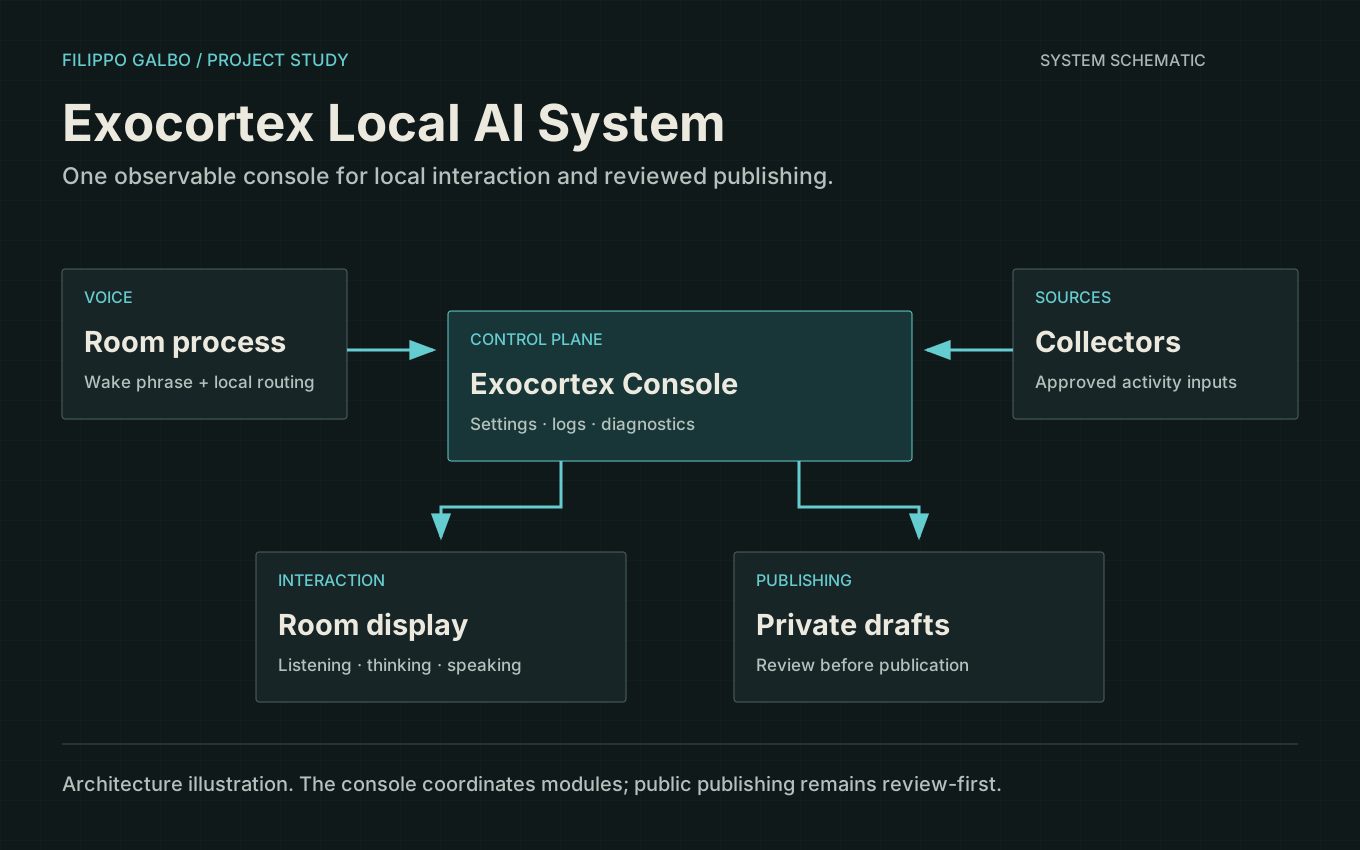
Desktop console, voice routing, source collectors, and publishing controls.
A local system with tested components for bringing voice, source status, and publishing review into one operator console.
Statusactive
Evidencetested
Record reviewed
Implementation
A Tauri console manages settings, logs, collectors, and publishing controls. A Python room process handles wake phrases, microphone and speaker selection, speech output, command routing, and display states. A Node sidecar gathers approved sources and creates private drafts for review.
The implementation combines a React/Tauri console, shared TypeScript schemas, a Node collector, and a Python room process. Commands use named action routes, while collected material stays in draft form until reviewed.